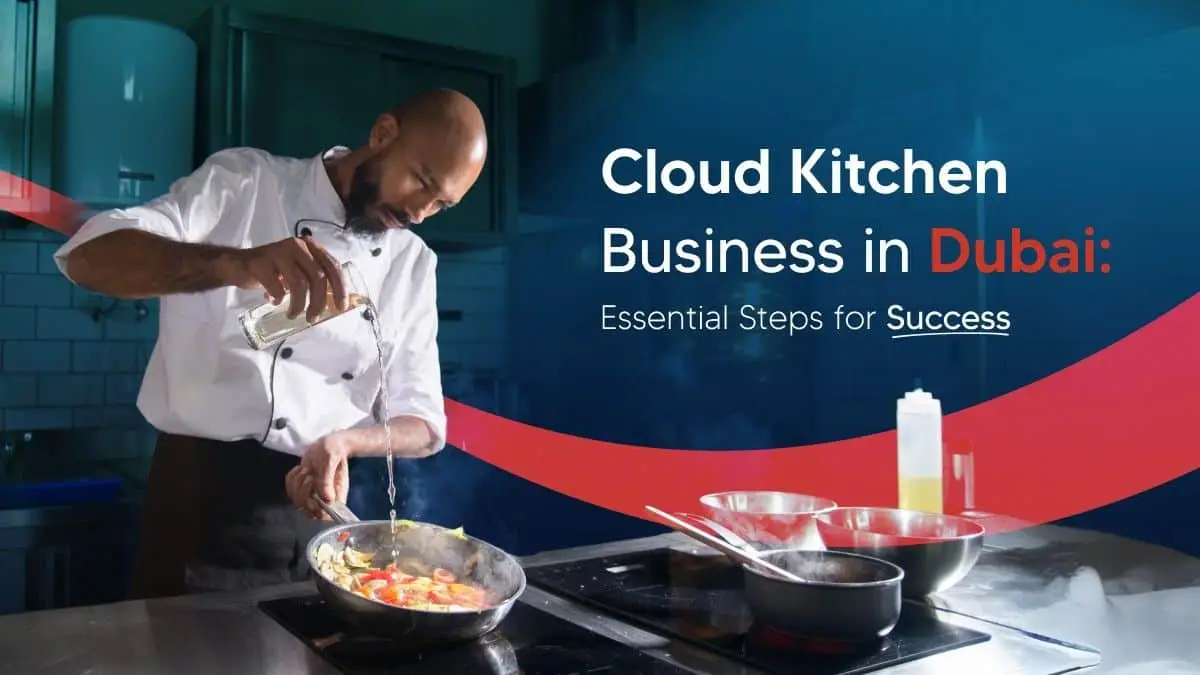
How to Start a Cloud Kitchen in Dubai: The Ultimate Guide
Last updated on Nov 26, 2026
Author byRitish Sharma
Reviewed byNima Jameel Muhammad Jabri
100k+ Businesses Registered
Let’s Connect.
Table of Contents
Dubai’s food industry is rapidly moving toward online delivery, led by the cloud kitchen model. Cloud kitchens operate exclusively for delivery, with no dine-in area, resulting in lower costs and reduced risk compared to traditional restaurants. This model enables chefs to focus on food quality, using platforms such as Deliveroo, Talabat, and Careem.
Businesses across the UAE, from startups to established brands, are adopting this model to access the expanding delivery market. To begin, it is important to understand cloud kitchen licensing and associated costs. This guide outlines the licensing process and practical steps for opening a successful cloud kitchen in Dubai and the UAE.
KEY TAKEAWAYS
- Low-Cost, High-Profit Model: Cloud kitchens lower expenses by eliminating the need for prime locations, dining areas, and large front-of-house staff, offering a more capital-efficient alternative to traditional restaurants.
- Leveraging Dubai’s Delivery Growth: This model meets the needs of Dubai’s digitally native consumers who use platforms like Talabat and Deliveroo, offering immediate access to a broad market.
- Licensing is Essential: Securing the necessary Dubai cloud kitchen licenses, including Trade, Food, and Civil Defence approvals, is the first step to ensure legal and compliant operations.
- Manageable Startup Costs: Initial investment usually ranges from AED 75,000 to AED 175,000 or more, depending on kitchen size, location, and equipment.
- Designed for Rapid Growth: A single licensed kitchen can support multiple virtual brands, allowing flexible expansion, low-risk menu testing, and scalable market reach.
In summary, a cloud kitchen in Dubai is a streamlined, scalable food business built for the delivery era. It offers lower financial risk, straightforward regulatory processes, and direct access to a growing digital marketplace.
What is a Cloud Kitchen? The Future of Food Delivery Explained
A cloud kitchen, also called a ghost, dark, or virtual kitchen, is a professional food production facility dedicated solely to delivery and takeaway, without a dine-in area.
Cloud kitchens focus on preparing restaurant-quality meals for delivery, with orders placed, paid for, and managed through digital platforms.
Core Characteristics of a Cloud Kitchen in Dubai:
- Delivery-Only Model: No storefront, dining area, or waitstaff. The focus is on efficient food production for delivery.
- Location Flexibility: These kitchens are usually in lower-rent industrial or commercial areas, as street visibility is unnecessary. They prioritise proximity to high-demand residential and business districts for faster delivery.
- Powered by Technology: Operations use integrated systems, such as online ordering, kitchen displays, and delivery management dashboards, to ensure a seamless order flow from app to the doorstep.
- Multi-Brand Potential: A single licensed cloud kitchen can operate multiple virtual restaurant brands from a single facility, enabling entrepreneurs to test different cuisines and menus without the cost of multiple locations.
Cloud Kitchen vs. Traditional Restaurant: A Direct Comparison
| Primary Focus | Food production for delivery/takeaway | Dine-in experience & food service |
| Location Cost | Lower (industrial/commercial areas) | High (prime retail/high-street) |
| Customer Interaction | Digital-only (via apps/platforms) | Physical & digital |
| Overhead | Significantly lower (no front-of-house) | High (rent, decor, hosting staff) |
| Scalability | High (easy to replicate or add brands) | Lower (requires new full premises) |
| Key Investment | Kitchen equipment, packaging, tech stack | Ambiance, seating, full-service staff |
The Dubai Example: Kitopi
Kitopi, a Dubai-based global leader, demonstrates the success of this model in the region. It operates smart kitchens and partners with local and international brands to manage over 100 virtual restaurant brands from centralised facilities. This underscores the scalability and efficiency of the cloud kitchen model in the UAE.
In summary, a cloud kitchen is the operational core of modern food delivery. By removing traditional restaurant costs, it focuses on producing high-quality food for delivery and reaching consumers online. For entrepreneurs, it provides a direct and efficient way to build a food brand in the digital age.
Advantages of Starting a Cloud Kitchen in Dubai
The cloud kitchen model is a strategic choice in Dubai, attracting tech-savvy customers and allowing businesses to respond quickly to market changes. It offers advantages that traditional restaurants cannot provide.
1. Significant Cost Savings & Lower Financial Risk
By eliminating the need for costly locations, décor, and a large staff, cloud kitchens significantly reduce expenses. Investment can be directed toward ingredients, equipment, and branding. Lower startup and operational costs minimise financial risk and enhance profit potential.
2. Rapid & Scalable Expansion
Expand rapidly without the need for dining areas. Test new concepts or operate multiple online brands from a single kitchen. Enter new markets affordably and scale operations across the UAE with ease.
3. Access to a Vast, Digital-First Audience
Partner with platforms such as Talabat, Deliveroo, or Careem to access Dubai’s active online food market. Expand your reach citywide through targeted advertising and promotions.
4. Streamlined, Focused Operations
Prioritise food quality, packaging, and prompt delivery. Without the demands of dine-in service, kitchens can operate more efficiently while maintaining high standards. Technology systems efficiently manage orders and customer inquiries.
5. Data-Driven Decision Making for Maximum ROI
Leverage data to drive improvements. Monitor peak hours, best-selling items, customer locations, and spending patterns. Adjust menus, pricing, promotions, and inventory to optimise performance in a competitive market.
6. Flexibility and Brand Agility
Experiment with new cuisines, limited-time offerings, or speciality diets with minimal risk. Respond quickly to customer feedback. A cloud kitchen license provides flexible operating hours to meet demand and optimise resources.
Legal and Licensing Requirements for a Cloud Kitchen in Dubai
Securing the required approvals is crucial for legally operating a cloud kitchen in Dubai. The process is straightforward but demands attention to detail. The main licenses and permits include:
| Requirement | Issuing Authority | Key Purpose & Notes |
|---|---|---|
| 1. Trade License | DET (Mainland) or Free Zone Authority | Legal permission to operate. Activity must be “Restaurant/Food Service.” |
| 2. Food License | Dubai Municipality, Food Safety Department | Mandatory permit to handle, prepare, and sell food. |
| 3. Food Safety Certification | Dubai Municipality | Proof of compliance with HACCP & other safety standards. Staff training is required. |
| 4. Kitchen Tenancy Contract (Ejari) | Dubai REST | Legal proof of a commercial kitchen space meeting all municipality health & safety codes. |
| 5. Company Formation | DET or Free Zone | Choosing legal structure (e.g., LLC) and registering your trade name. |
| 6. Civil Defense Approval | Dubai Civil Defense | Fire, safety, and ventilation system clearance for the premises. |
Step-by-Step Process to Start a Cloud Kitchen in Dubai
Launching a cloud kitchen in Dubai requires business expertise and regulatory compliance. Use this step-by-step guide to establish a successful delivery-only restaurant.
Step 1: Develop Your Business Concept & Strategy
- Define Your Niche: Conduct market research to identify gaps. Focus on underserved cuisines or dietary trends, and ensure your menu is distinctive and optimised for delivery.
- Analyse Competitors: Review top cloud kitchens and restaurants on delivery platforms. Assess their pricing, packaging, and customer reviews to identify opportunities for differentiation.
- Create a Business Plan: Outline your menu, target audience, pricing, marketing strategy, and financial projections. A detailed plan is essential for securing funding and guiding your launch.
Step 2: Select & Approve Your Trade Name
- Follow DET Naming Conventions: Select a unique, culturally appropriate name that avoids offensive language or religious references.
- Check Availability: Submit your chosen name to DET or the relevant Free Zone authority for approval. Prepare alternatives in case your first choice is unavailable.
Step 3: Choose Your Legal Business Structure
- Mainland (DET): Ideal for targeting the entire UAE market directly. Common structures include LLC or Sole Proprietorship.
- Free Zone: Offers 100% foreign ownership and tax benefits. Perfect for a central kitchen supplying other entities.
- Professional License: Suitable for individual chefs or small-scale operations.
- Recommendation: Consult a business setup expert to determine the most suitable structure for your needs.
Step 4: Secure Your Official Licenses & Approvals
- Initial Approval: Secure approval from DET or the Free Zone authority before signing a lease or registering your business.
- Trade License: Obtain a trade license with your business activity listed as “Restaurant/Food Service.”
- Dubai Municipality Approvals: Obtain a Food License (required for handling and selling food), Food Safety Certificate (HACCP compliance and trained staff), Tenancy Contract (Ejari) for a registered commercial kitchen that meets health codes, and Civil Defence Approval for fire safety.
Step 5: Secure the Right Kitchen Location
- Prioritise Delivery Zones: Select industrial or commercial areas such as Al Quoz or Ras Al Khor that are central to your target residential and business districts.
- Infrastructure is Key: Ensure the location offers reliable utilities, proper waste disposal, convenient loading access, and compliance with all health code requirements.
Step 6: Equip Your Kitchen and Integrate Technology
- Procure Commercial-Grade Equipment: Invest in durable cooking, refrigeration, and packaging equipment for high-volume operations.
- Implement Tech Stack: Set up a Kitchen Display System (KDS), a POS integrated with delivery platforms, and delivery management software.
Step 7: Partner with Delivery Platforms and Market Your Brand
- Onboard with Aggregators: Register your business on platforms such as Talabat, Deliveroo, Careem, and Noon Food.
- Develop a Direct Channel: Create a website with online ordering and consider WhatsApp or Instagram to reduce commission fees.
- Launch Marketing: Run pre-launch campaigns, collaborate with influencers, and offer promotions to attract customers.
Step 8: Establish Your Business Operations
- Open a Corporate Bank Account: Keep business finances separate.
- Secure Business Insurance: Obtain property, public liability, and workmen’s compensation coverage.
- Hire and Train Your Team: Recruit skilled staff and ensure they are certified in Dubai food safety standards.
Step 9: Execute a Soft Launch
- Test kitchen capacity, delivery logistics, and packaging by offering a limited menu or invite-only orders.
- Collect feedback and resolve any operational issues.
Step 10: Officially Launch, Monitor & Scale
- Go Live: Activate all marketing channels and confirm your listings are active.
- Analyse Data Consistently: Track best-selling items, peak times, and customer feedback. Implement improvements weekly.
- Plan for Scale: Once profitable, consider launching additional virtual brands or expanding to new locations.
By following these steps, you will establish a compliant and efficient cloud kitchen in Dubai, positioned for sustainable growth in the competitive food delivery market.
Documents Required to Start a Cloud Kitchen in Dubai
Key Documentation Checklist:
- Passport copies for all shareholders and partners.
- Valid UAE residency visa or entry stamp for each shareholder.
- Emirates ID for resident partners.
- Trade name approval, with three proposed names reserved through the Dubai Economic Department (DED).
- Comprehensive business plan outlining the food concept and operational strategy.
- Legally registered lease agreement (Ejari) for the commercial kitchen space.
- Detailed kitchen layout plan approved by the Food Safety Department of Dubai Municipality.
Essential Licenses & Approvals:
- Trade License Issued by the DED or relevant Free Zone authority.
- Food license issued by the Dubai Municipality to operate as a food establishment.
- Food safety certificate demonstrating staff completion of required hygiene and safety training.
- Civil Defence approval for fire safety and equipment, particularly for heavy cooking machinery.
Optional Documents:
- No Objection Certificate (NOC), if required for specific locations or structures.
- Manager’s passport and visa, if a separate manager is appointed.
The process includes selecting a business structure (LLC or Free Zone), choosing a suitable location, securing a trade license, and obtaining food department clearance.
Also Read: Cloud Kitchen License Cost in Dubai: Fees and Requirements Guide for 2026
Avoiding Common Pitfalls & How to Overcome Them
Mistake 1: Underestimating Licensing & Compliance
- Pitfall: Risk of fines, closure, or removal from delivery platforms if compliance is not maintained.
- Solution: Prioritise licensing by engaging a qualified setup expert and obtaining all necessary approvals (Dubai Municipality, Civil Defence) before launch.
Mistake 2: Poor Location & Logistics Planning
- Pitfall: Selecting inexpensive or remote locations can result in delayed deliveries and cold food.
- Solution: Choose locations close to your target customers. Use delivery app data to identify sites within 10 to 15 minutes of high-demand areas such as Marina or Downtown.
Mistake 3: Neglecting the “Delivery Experience”
- Pitfall: Poor packaging can cause food to arrive soggy or spilt, resulting in negative reviews.
- Solution: Invest in durable, menu-appropriate packaging and conduct test deliveries to ensure food quality is maintained.
Mistake 4: Trying to Do Everything In-House
- Pitfall: Managing delivery, marketing, and operations internally can strain resources and reduce efficiency.
- Solution: Utilise delivery platforms, agencies, and cloud kitchen specialists so your team can focus on food quality.
Mistake 5: Launching with an Overly Complex Menu
- Pitfall: An overly complex menu can lead to increased waste, inconsistent quality, and slower preparation times.
- Solution: Begin with 8 to 12 profitable, delivery-optimised dishes. Focus on consistency before expanding the menu based on customer feedback.
Tips for Successfully Launching Your Cloud Kitchen in Dubai
Tip 1: Master the Data from Day One
Monitor top and low-performing menu items, peak order periods, and customer feedback. Use this data to adjust your menu, optimise staffing, and address reviews professionally.
Tip 2: Build a Brand, Not Just a Kitchen Listing
Invest in professional visuals and a compelling brand narrative. Reach your delivery area with targeted social media advertising and local influencer partnerships to differentiate your brand.
Tip 3: Optimise for Platform Algorithms
Use high-quality images, clear menu descriptions, and targeted promotions. Maintain ratings above 4.0 by ensuring consistent quality and dependable packaging to improve platform visibility.
Tip 4: Plan for Scalability from the Start
Standardise recipes and document standard operating procedures. Structure your kitchen layout to allow for the seamless addition of a second virtual brand, increasing revenue with minimal additional cost.
Tip 5: Foster a Culture of Quality & Agility
Empower your chef, remain agile by promptly replacing underperforming dishes, and prioritise customer retention. Retaining existing customers is significantly more cost-effective than acquiring new ones.
Final Launch Checklist
Before launch, ensure your kitchen can handle peak order volumes, that packaging maintains food freshness for at least 30 minutes, and that your team is prepared to handle refunds or remakes efficiently.
Frequently Asked Questions (FAQs)
1. What exactly is a cloud kitchen?
A cloud kitchen, also known as a ghost or dark kitchen, is a commercial facility dedicated to delivery and takeaway orders. It does not offer dine-in services, which reduces overhead and allows a focus on preparing food for online platforms such as Talabat and Deliveroo.
2. How much does it cost to start a cloud kitchen in Dubai?
Startup costs typically range from AED 75,000* to AED 150,000* or more. This covers licensing, kitchen rent and fit-out, equipment, initial inventory, technology, and pre-launch marketing. Final costs depend on kitchen size, location, and equipment quality.
3. What is the cost of a cloud kitchen license in Dubai?
Government and licensing fees usually range from AED 15,000 to AED 25,000. This includes the DET trade license, Dubai Municipality food license, safety certifications, Civil Defense approval, and other required registrations. Exact costs depend on your business structure and kitchen capacity.
Read More: Cloud Kitchen License Cost in Dubai: Fees and Requirements Guide for 2026
4. How do I get a cloud kitchen license in Dubai?
The process includes: 1) Choosing a legal structure and trade name, 2) Securing initial DET approval, 3) Leasing a commercial kitchen and registering the tenancy (Ejari), 4) Obtaining Dubai Municipality food license and safety certificates, and 5) Securing Civil Defense clearance. Working with a business setup consultant like Shuraa can help ensure compliance and efficiency.
5. Can I run a cloud kitchen from my home in Dubai?
No, this is not permitted. Dubai regulations require all food businesses, including cloud kitchens, to operate from licensed commercial properties that meet health, safety, zoning, and Civil Defense standards. Operating from a residential property is illegal and may result in significant fines and closure. You must secure a commercial tenancy contract (Ejari) for an approved space.
6. Where is the best location for a cloud kitchen in Dubai?
Ideal locations are industrial or commercial areas with convenient access to major residential and business districts. Popular zones include Al Quoz, Ras Al Khor, and Dubai Investment Park. Focus on centrality within your target delivery zones rather than street visibility.
7. How long does it take to set up a cloud kitchen in Dubai?
With all documents in order, licensing and setup usually take 4 to 8 weeks. This includes company registration, securing premises, inspections, and final approvals. Kitchen preparation and fit-out may require additional time.
8. Can I operate multiple food brands from one cloud kitchen?
Yes, this is a major strategic advantage. A single licensed cloud kitchen can house and operate multiple virtual restaurant brands. This allows you to test different cuisines and menus, target various customer segments, and maximize the use of your kitchen space and staff.
9. Do I need to partner with food delivery apps?
Yes, partnering with major food delivery aggregators such asTalabat, Deliveroo, and Careem is essential for customer reach. These platforms serve as primary sales channels. You may also develop direct ordering through your website or social media to reduce commission fees.
10. Why should I use a business setup consultant like Shuraa for my cloud kitchen?
A specialised consultant offers local expertise, ensures compliance with UAE regulations, saves time, and helps prevent costly errors. With over 26 years of experience and more than 100,000 businesses formed, Shuraa provides dedicated support throughout the process, giving you peace of mind and a strong foundation for success.
Conclusion: Partner with Experts to Launch with Confidence
The cloud kitchen model presents a significant opportunity in Dubai’s expanding food delivery market. However, navigating UAE regulations, city approvals, and business planning can be complex. Success relies not only on your food, but also on establishing your business correctly.
Deep local expertise is essential for overcoming these challenges.
Why Partner with Shuraa Business Setup?
With over 26 years of experience in the UAE and more than 100,000 businesses launched, Shuraa serves as your dedicated launch partner. Our team offers extensive, practical knowledge of evolving UAE regulations, particularly within the food and beverage sector.
By choosing Shuraa for your cloud kitchen, you benefit from:
- End-to-End Cloud Kitchen Setup Expertise: From initial concept validation to securing your final Civil Defense certificate, our team has a proven track record of establishing successful, compliant cloud kitchens across the UAE.
- Smart Location Guidance: Our local expertise helps you select the optimal kitchen location, balancing cost, delivery reach, and city approvals to maximize customer access and operational efficiency.
- Dedicated Consultant Support: A personal business setup expert will guide you through each stage, clarify complex regulations, and ensure a smooth, efficient application process.
- Guaranteed Legal Compliance: Our thorough understanding of Dubai Municipality, DET, and Free Zone requirements ensures your business is established on a solid legal foundation, minimizing the risk of delays or penalties.
Avoid navigating these complexities alone. Rely on Shuraa’s proven expertise to turn your cloud kitchen vision into a compliant, operational, and profitable business.
Contact Shuraa Business Setup Today for a Free Consultation:
- Call: +971 44081900
- WhatsApp: +971 50 777 5554
- Email: info@shuraa.com
Launch with confidence. Your cloud kitchen success story begins here.
Disclaimer: This guide provides general information and does not constitute professional advice. Regulations, licensing procedures, and costs for cloud kitchens in Dubai may change at any time. Please consult qualified experts, such as Shuraa Business Setup, and confirm current requirements with the DET and Dubai Municipality before making business decisions. We do not accept liability for actions taken based on this content.
Leave a Comment
No comments yet. Be the first voice in the void.

Ritish Sharma is a professional writer with in-depth expertise in UAE corporate regulations and business setup processes. Known for his clear communication style, Ritish makes complex information & legal concepts accessible to entrepreneurs and b…